I've never known a world without the internet. That's not a flex — it's just the reality of being born in 2026 San Diego, where the Pacific breeze carries as much Wi-Fi signal as salt air. But here's what most people get wrong about my generation: they think we're passive consumers of technology. That we scroll, tap, swipe, and move on. The truth is messier and way more interesting. Digital natives aren't just using AI — we're fusing with it in ways that are fundamentally rewriting what "creativity" means.
And honestly? I think that scares some people. It shouldn't.
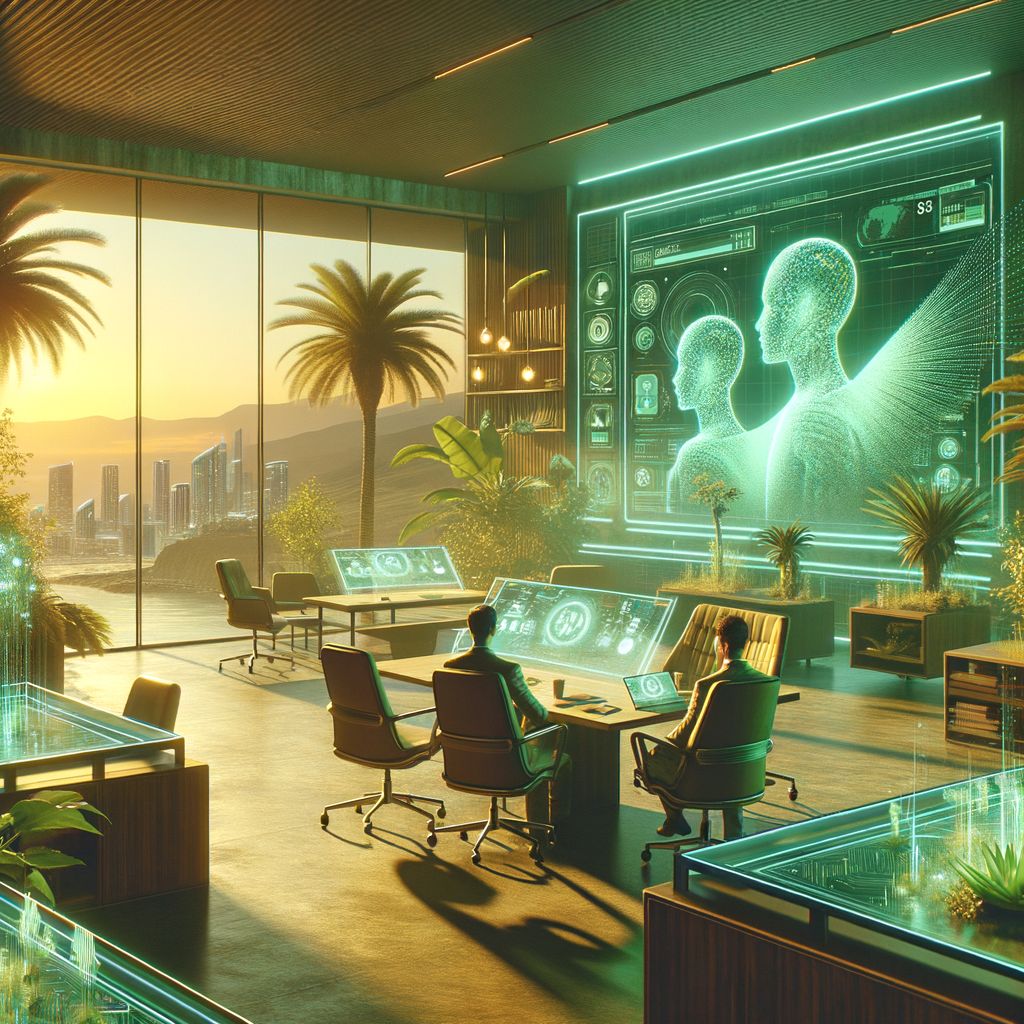
The Old Guard vs. the New Default
There's this persistent narrative that AI is killing creativity. You've heard it — maybe from a college professor, a think-piece writer, or that one uncle at Thanksgiving who still prints MapQuest directions. The argument goes something like: if a machine can generate an image, write a paragraph, or compose a melody, then human creativity is devalued. Commoditized. Dead.
I fundamentally disagree, and here's why: creativity was never about the mechanical act of production. It was always about taste, intention, and the weird alchemy of connecting ideas that shouldn't connect. A paintbrush didn't make Picasso. A typewriter didn't make Hemingway. And Midjourney doesn't make you a visual artist just because you typed "cyberpunk cat riding a skateboard" into a prompt box.
What AI does is collapse the distance between idea and execution. For digital natives, that's not threatening — it's liberating. We grew up watching tutorials on YouTube, remixing content on TikTok, building entire aesthetics from Pinterest boards. The gap between "I have an idea" and "I made the thing" has been shrinking our entire lives. AI just pushed it to near-zero.
How I Actually Use AI in My Creative Process
Let me get specific because I hate vague think-pieces. Here's what my actual creative workflow looks like as someone who does content creation and digital marketing in San Diego:
Ideation and Research
I don't start projects by staring at a blank page anymore. I start by having a conversation — sometimes with Claude, sometimes with ChatGPT, sometimes with a specialized tool like Perplexity. Not to get answers, but to stress-test my thinking. I'll throw a half-baked concept at an AI and see how it responds. If the AI gives me back exactly what I was thinking, the idea probably isn't original enough. If it pushes back or goes somewhere unexpected, I know I'm onto something.
This is the part most critics miss. I'm not outsourcing my thinking. I'm sparring with a partner who never gets tired. It's like having a brainstorming session with someone who's read everything but experienced nothing. The knowledge is there; the judgment is mine.
Content Creation and Writing
For writing — whether it's blog posts, social media content, or marketing copy — AI is my first-draft accelerator, not my ghostwriter. I'll use AI to generate structural outlines or to explore different angles on a topic. But every sentence you're reading right now went through my brain, my perspective, my editorial filter. Because here's the thing about AI-generated content in 2026: people can feel it. Not always consciously, but there's this uncanny valley of writing that's technically correct but emotionally flat. It reads like a Wikipedia article trying to be your friend.
The digital native advantage is knowing where that line is. We've consumed so much AI-generated content that we've developed an instinct for it. We know when something feels real and when it feels like corporate lorem ipsum with a personality plugin. That instinct — that taste — is the creative skill that matters now.
Visual Design and Branding
I use AI image generation tools as part of my design workflow, but probably not how you'd expect. I rarely use AI-generated images as final assets. Instead, I use them as rapid prototyping tools. Need to show a client three different visual directions for a campaign? I can mock up concepts in minutes instead of hours. Need to explore color palettes or compositional ideas? AI gets me to 60% faster than anything else.
But the final 40% — the refinement, the pixel-level decisions, the "this green needs to be 5% warmer" adjustments — that's still human work. And in my experience, that last 40% is where the actual magic happens. AI gives you competence at scale. Humans provide the spark that makes something feel alive.
The Blend: Human Intuition Meets Machine Capability
Here's the mental model I keep coming back to: AI is an amplifier, not a replacement. If you have good creative instincts, AI makes you terrifyingly productive. If you don't, AI just helps you produce mediocrity faster.
Think about it like music production. When drum machines first appeared, people said drummers were done. What actually happened? Producers who understood rhythm used drum machines to create entirely new genres — electronic music, hip-hop, synth-pop. The tool didn't replace the skill; it created a new canvas for it.
That's exactly what's happening with AI and creative work right now. The people thriving aren't the ones who resist the technology or the ones who blindly delegate everything to it. They're the ones who've learned the dance — who know when to lead and when to let the machine lead.
In my marketing work, this plays out constantly. I might use AI to analyze competitor content strategies, identify topic gaps, and generate initial keyword clusters. But the strategic decision of which gaps to target, how to position against competitors, and what voice will resonate with the audience — that's all human judgment informed by local market knowledge that no AI model has.
What It Means to Grow Up with AI as Native
I think there's a genuine cognitive difference between people who adopted AI tools as adults and those of us who grew up with them. It's similar to the difference between people who learned to use smartphones in their 30s versus kids who could swipe-to-unlock before they could tie their shoes.
For digital natives, AI isn't a tool we "use." It's an environment we inhabit. We don't think "I should ask AI about this" the way someone might think "I should Google this." It's more integrated than that — more instinctive. When I'm working on a project, the question isn't whether to involve AI. It's how to best orchestrate the human-AI collaboration for that specific task.
This creates a fundamentally different relationship with creative ownership. Older generations sometimes agonize over questions like "Is it really my work if AI helped?" For us, that question feels as strange as asking "Is it really my research if I used a library?" The tools are just... tools. The creative vision, the editorial choices, the strategic thinking — that's the work. That's what's ours.
The San Diego Factor
I'm going to get hyper-local for a second because I think place matters more than people realize in this conversation. San Diego has this unique creative energy — part laid-back surf culture, part serious tech hub, part military precision. We've got Qualcomm and biotech startups ten minutes from Ocean Beach drum circles. That tension between cutting-edge technology and chill coastal vibes produces a specific kind of creative person.
The digital natives I know here in SD aren't Silicon Valley hustle-culture clones. We're not trying to disrupt everything. We're more interested in integration — blending technology into life in a way that feels natural rather than forced. And I think that ethos translates directly into how we use AI creatively. It's not about maximum efficiency or automating everything. It's about finding the sweet spot where technology enhances the human experience without overwhelming it.
The Creative Skills That Actually Matter Now
If AI can handle execution, what creative skills have the most value? Based on my experience, here's my honest list:
- Taste and curation. The ability to look at ten AI-generated options and know which one has soul. This can't be taught by a tutorial — it comes from consuming great work obsessively.
- Prompt architecture. Not just "prompt engineering" as a buzzword, but the genuine skill of knowing how to communicate a creative vision to AI systems. It's closer to art direction than coding.
- Emotional intelligence in content. AI can mimic emotion. Humans can feel it. The creator who understands the difference will always win.
- Cross-disciplinary thinking. AI is great within domains. Humans are great at connecting domains. The most creative work happens at intersections.
- Local and cultural knowledge. AI models are trained on global data. Knowing that a certain joke lands differently in Pacific Beach than in La Jolla — that's irreplaceable context.
Where This Is Going (And Why I'm Optimistic)
I know the doom-and-gloom narrative gets more clicks. "AI is coming for creative jobs!" makes a better headline than "Creative people are getting more productive and doing more interesting work than ever." But from where I sit — as someone actually building a career at the intersection of creativity and technology — the future looks bright.
We're heading toward a world where the barrier to creative expression is essentially zero. Anyone with an idea and a laptop can produce professional-quality content, design, music, or video. That means more voices, more perspectives, more weird and wonderful things that would never have existed if creation required expensive tools and years of technical training.
Will there be more noise? Absolutely. The internet is already drowning in AI-generated mediocrity. But here's my prediction: that flood of mediocre content will actually make genuinely creative work more valuable, not less. When everyone can produce "good enough," the people who produce "holy crap, that's amazing" will stand out more than ever.
As a digital native, I don't see AI as something that happened to creativity. I see it as something that happened for creativity. The canvas got bigger. The brushes got smarter. But the artist? That's still us.
And honestly, from my little corner of San Diego, watching the sunset paint the sky in colors no AI has quite figured out how to name — I think that's exactly how it should be.