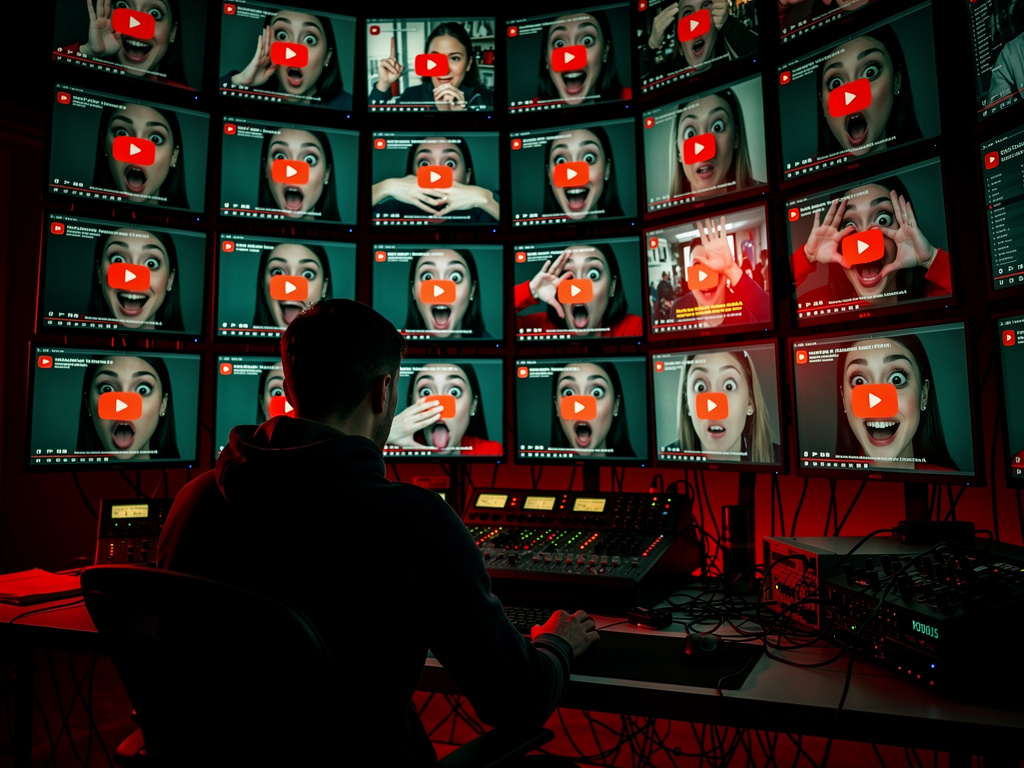
YouTube spent the last week clarifying a point a lot of people were pretending not to understand: the platform is not obligated to pay for AI slop.
That sounds obvious, but apparently it needed to be said out loud. The second YouTube tightened its language around “inauthentic content,” a whole swarm of creators translated that into the usual lazy panic: YouTube is banning AI. The robots are over. Creativity is dead. Human art is back. None of that is the real story.
The real story is simpler and more interesting. YouTube is finally treating low-effort, mass-produced, repetitive AI sludge the same way every large platform eventually treats industrial junk: as a spam problem with a monetization problem attached to it.
And honestly, good. It should.
AI is not the problem. Interchangeability is.
If you use AI to tighten a script, clean up audio, generate B-roll ideas, mock up thumbnails, or accelerate editing, YouTube is not coming for you. The company has said as much in its own help docs. It explicitly allows plenty of AI-assisted production work, and it also says disclosing realistic AI content does not automatically hurt monetization.
What YouTube is trying to squeeze is the business model built around flooding the platform with fifty versions of the same hollow video, the same synthetic narrator, the same recycled visual loops, the same topic template, and the same fake urgency. That is not a creative medium. That is a factory line.
This is an economics move, not an ethics sermon
When platforms change policy language, people love turning it into a morality play. But YouTube is not suddenly growing a conscience about art. It is acting like a company whose recommendation engine, ad inventory, and viewer trust all get worse when too much of the feed starts feeling interchangeable.
Brands do not want their ads parked next to uncanny garbage made by channels that exist only to arbitrage attention. Viewers do not want search results and homepage slots packed with videos that all feel like the same machine changed shirts. Real creators do not want to compete with industrial upload schedules powered by auto-generated scripts and copy-paste packaging.
So this is not really about whether AI is “real creativity.” That debate is boring now. This is about quality control in a system where low-cost generation made it cheap to flood the zone.
That sequence matters. The labeling push said, “viewers should know when AI is involved.” The monetization clarification says, “and if your entire channel is basically a synthetic content mill, do not expect us to reward it.”
That is a much more serious move than another transparency badge.
YouTube is separating AI as a tool from AI as a factory
This distinction is where a lot of the discourse breaks down. People keep talking about “AI content” like it is one category. It is not. There is a huge difference between using AI inside a workflow and building a workflow whose only real idea is volume.
YouTube's own guidance makes that pretty clear. Production assistance like script polishing, title generation, thumbnail ideation, caption creation, voice cleanup, or even some forms of synthetic dubbing are not automatically suspect. That is just software getting folded into the creation stack, which is happening everywhere. I wrote about that broader shift in Typing Into Apps Is Starting to Look Old. AI is becoming part of the interface layer across normal tools.
But there is another category that platforms know on sight: channels built on repeated templates, synthetic narration, scraped material, misleading packaging, or automated upload pipelines where the “creator” barely appears except as the account owner cashing the check.
That is the line YouTube is drawing now, and it lines up with something I have been saying for a while. In The Real Creative AI Product Is Taste Memory, I argued that the valuable AI layer is not one-off generation but continuity, judgment, and remembered taste. Slop channels are the opposite of that. They are continuity without judgment. Output without point of view. Volume without taste.
So yes, AI can absolutely be part of serious creative work. But if the result is indistinguishable from ten thousand other channels using the same pack of tricks, do not act shocked when the platform classifies it closer to spam than to media.
The real target is industrial sameness
The most useful phrase in YouTube's broader policy universe is not even “AI.” It is the language around automated or synthetic mass-production.
That is the actual tell. The platform is not primarily worried about whether a frame, a voice, or a background came from a model. It is worried about channels using automation to flood the system with repetitive content that adds barely anything new. The support pages and spam policies increasingly read like a manual for spotting industrialized sameness: scraping, repetition, evasion, deceptive packaging, fake engagement, scaled upload behavior.
That is why this story matters beyond YouTube. It is one of the first big platforms openly admitting that the slop era is less an AI ethics crisis than a distribution integrity crisis. Once generation gets cheap enough, every recommendation system has to decide whether it wants to reward originality or throughput.
And if it waits too long to answer that question, the answer gets made for it by users leaving.

The platform trained people to make this trash
To be fair, YouTube helped build the conditions for this.
Platforms spent years teaching creators that frequency matters, packaging matters, hooks matter, trend surfing matters, and the reward for hitting the machine correctly is visibility. Then generative tools showed up and made all of that cheaper to do at scale. Of course a huge class of operators sprinted straight toward “how many channels can I run with one script loop and one cloned voice?” That is exactly what the incentive structure pointed at.
So I am not pretending this is only about bad actors. It is also about the inevitable outcome of a creator economy that kept confusing production volume with value.
That is why the slop problem spread so fast. The tools got cheaper, yes. But more importantly, the metrics already existed. Views. Upload frequency. CTR bait. Topic cloning. Fast-turn trend hijacking. The only new ingredient was that the cost of manufacturing passable-looking junk collapsed.
It is the same broad pattern I wrote about in Google Made AI Image Generation a Profile Product. Once AI tools stop being novelties and start plugging directly into real consumer behavior, the interesting question becomes incentive design. What does the system reward? Taste and context, or speed and sameness?
YouTube is finally answering that question with money instead of PR copy.
Good creators should not panic. Lazy operators should.
If you actually make things, the smart read here is not fear. It is differentiation.
The safest channels in this next phase are the ones that are visibly about something. A point of view. A recurring human presence. Original reporting. Real commentary. Strong editing choices. Niche expertise. Taste. Structure. Any signal that the channel exists because somebody is actually there making decisions.
The most vulnerable channels are the ones where everything can be swapped without changing the experience: same voice, same pacing, same stock loop, same outrage frame, same listicle skeleton, same pseudo-explainer energy. Those channels were always built on borrowed time. AI just let them industrialize faster.
- Using AI to accelerate your workflow is fine if the work still sounds and feels like you.
- Using AI to replace your judgment with a template farm is exactly what platforms are starting to target.
- Disclosure matters for realism and trust, but disclosure alone will not save content that is empty on arrival.
- Originality is becoming easier to spot because sameness is becoming impossible to ignore.
That last point matters more than people think. The slop wave did not make quality irrelevant. It made quality easier to value by contrast. When the feed gets crowded with fake urgency and machine-polished emptiness, anything with real texture suddenly stands out harder.
The next moderation fight is really about signal
I do not think YouTube is done here. Clarifying monetization language is the easy part. The hard part is enforcement. Plenty of junk will still get through. Plenty of legitimate creators using automation-heavy workflows will probably get misread. The line between “efficient production” and “synthetic content farming” is not always clean at scale.
But even imperfect enforcement changes behavior, because creators adapt to whatever the platform makes legible. If the money starts flowing away from cloned sameness and back toward channels with clear authorship, people will adjust. They always do.
That is why I think this week's YouTube move is more important than it looks. It is not just a policy cleanup. It is a signal about what the next platform era might reward.
The cheap part of AI content is getting cheaper every month. The scarce part is becoming more obvious: credibility, taste, authorship, and trust. Those are slower to fake. They also happen to be what audiences actually come back for.
So no, YouTube is not waging war on AI. It is doing something much more practical. It is starting to price the difference between using AI as a tool and using AI as a sludge pump.
And if your whole business depends on the platform not noticing that difference, that is not a creator problem. That is a spammer problem.