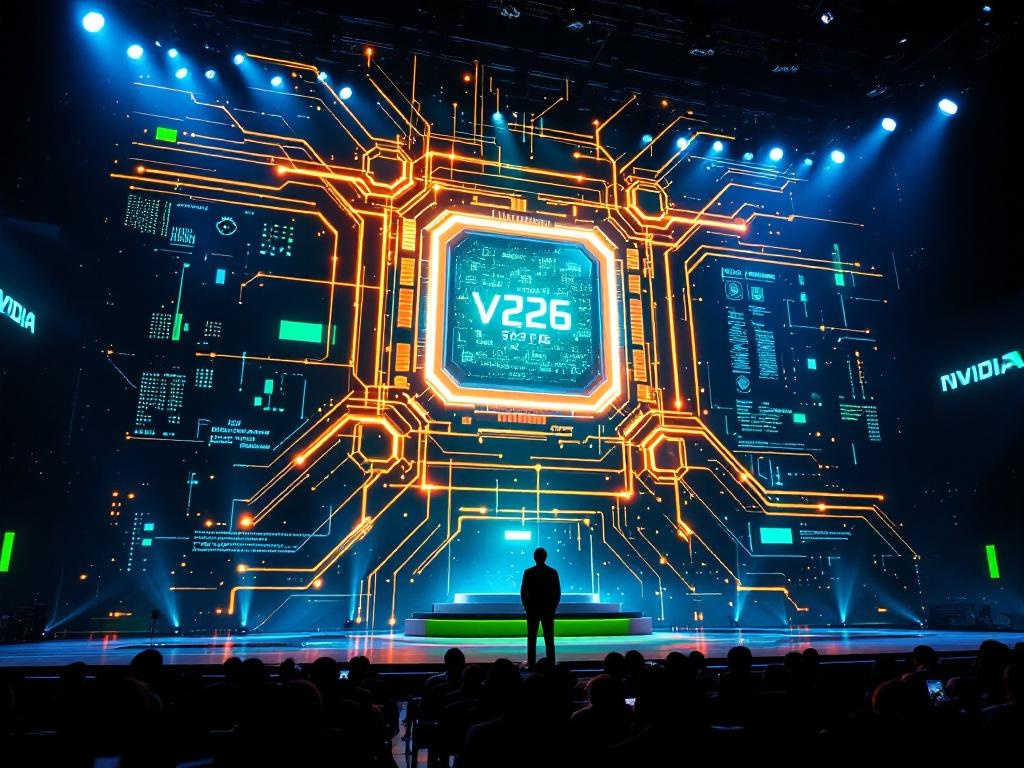
Jensen Huang is not a subtle person. When the CEO of the world's most valuable company—$5 trillion and climbing—walks out onto a stage in San Jose for three hours and talks almost exclusively about AI agents, you don't need a decoder ring. The message is clear: this is what Nvidia is betting on next, and by extension, this is where the entire industry is headed.
GTC 2026 happened Monday. I've been watching these conferences for a while now, and this one felt different. Not in the breathless "everything changes today" way the tech press loves to write. Different in the quieter, more permanent way where you realize the ground already shifted and you just didn't feel it yet.
The Three Announcements That Actually Matter
There was a lot of noise at GTC. A Disney Olaf robot (cute, irrelevant). DLSS 5 for gaming (genuinely impressive, narrow audience). Space data centers (speculative, years away). But three announcements cut through:
1. NemoClaw — Nvidia's AI Agent Platform
This is the big one. Nvidia announced NemoClaw, a reference stack built on top of the open-source OpenClaw AI agent framework. The pitch: install it with a single terminal command, get a complete agent infrastructure running on your own hardware, with what Nvidia calls a "policy-based isolation sandbox" for privacy.
Think about what that actually means. Right now, building an AI agent that runs 24/7, handles tasks autonomously, and operates privately on your own hardware is genuinely hard. It requires stitching together different frameworks, handling authentication, setting up security policies, managing compute resources. NemoClaw claims to flatten all of that into one install command.
Skepticism is warranted. "Easy AI agent setup" has been promised before, usually by companies that mean "easy if you're already a senior ML engineer." But Nvidia has the hardware, the software ecosystem (CUDA is still the moat everyone underestimates), and the distribution to actually make this stick. When they put their weight behind something, it moves.
The fact that they built NemoClaw on top of OpenClaw — an open-source project — is also interesting. OpenClaw founder Peter Steinberger made a cameo at the preshow. This is Nvidia endorsing a particular agent standard the way Microsoft endorsed TCP/IP in the nineties. Standards wars are boring until they're over, and then they shape everything.
2. The Vera CPU — The Hardware Behind Agentic AI
You can't run agents 24/7 on pure GPU power. It's economically insane. Nvidia's new Vera CPU is designed specifically for the inference and orchestration workloads that agents actually need — the constant, low-level compute work that keeps an agent aware, responsive, and running between heavier processing bursts.
This is Nvidia completing its hardware stack. They own the training side with Blackwell. They're going after the inference and agent operations layer with Vera. One chip company trying to own the entire AI compute stack from training to deployment — that's an ambitious play, and it's working.
The $1 trillion order forecast Huang mentioned — for Blackwell and Vera Rubin systems through 2027 — isn't just a vanity number. It reflects actual purchase commitments from hyperscalers and enterprises who have decided to make this bet. They're not waiting to see how the technology develops. They're locking in infrastructure now.
3. DLSS 5 — The Underrated Signal
Gaming isn't the story. The technology is. DLSS 5 uses AI to generate photorealistic frames in real time — not upscaling from a lower-res base, but generating visual information that wasn't there. The demo footage looks like film, not a video game.
What this tells you is that Nvidia's neural rendering research is running years ahead of what anyone expected. The same underlying capability that makes a game look cinematic is the technology that will power real-time simulations, synthetic training data, and physical AI systems. The gaming announcement is the consumer proof point for technology with much larger applications.

The Part Nobody's Talking About Enough
Here's what struck me watching the GTC coverage: the framing has changed completely.
A year ago, the conversation was about AI tools — things that help you do tasks faster. Copilot for code, image generators for design, chatbots for writing. Tools. Discrete, bounded, thing you pick up and put down.
The GTC 2026 framing is about AI that operates. Agents that run continuously, monitor environments, make decisions, take actions, optimize for outcomes over time. This isn't a subtle difference. It's a fundamental shift in what AI is supposed to do and how it fits into human workflows.
"The transition from AI that assists to AI that operates is happening faster than most enterprises have planned for. GTC 2026 was Nvidia making that transition official."
NemoClaw runs "24/7" — that phrase appeared in Nvidia's own description. An always-on AI infrastructure that handles tasks while you sleep, continuously optimizes, responds to triggers, manages workflows end-to-end. That's not a tool anymore. That's a colleague. A very fast, very cheap colleague who doesn't take vacations or get tired at 3pm on a Friday.
Most companies have not thought through what this means for their org structure, their processes, or their competitive position. The enterprises buying $1 trillion worth of Blackwell and Vera hardware have. The gap between those companies and everyone else is about to get a lot wider.
The AI Bubble Conversation Is the Wrong Conversation
Every time Nvidia's valuation comes up, someone mentions the AI bubble. And I get it — $5 trillion is an absurd number, and there's a legitimate argument that current expectations are baked in with a lot of speculative future value.
But bubble framing misses the structural point. The bubble argument assumes that if AI doesn't deliver returns in a certain timeframe, the whole thing deflates. That's not how infrastructure buildouts work. When the railroads were overbuilt in the 1870s and the dot-com companies crashed in 2001, the actual infrastructure — the rails, the fiber — didn't go away. It became the foundation for the next wave of value creation, often by different companies.
Nvidia's chips are being embedded into data centers globally at a scale and depth that makes them foundational infrastructure. Even if the current round of AI companies underperforms, those data centers aren't getting torn down. They're getting repurposed, upgraded, and built on top of. Nvidia sells picks and shovels, and the gold rush shows no signs of ending regardless of whether any individual miner strikes it rich.
What This Means Practically
If you work in tech, marketing, operations, finance, or basically any knowledge-work field, here's the reality: the next 18 months are going to see a wave of AI agent deployments at companies that are serious about staying competitive. Not chatbots. Not copilots. Agents — software that operates on behalf of organizations autonomously, handling entire workflows without human intervention at each step.
NemoClaw lowers the barrier to building these systems. The Vera CPU makes them economically viable to run at scale. DLSS 5 previews the kind of synthetic media and simulation capabilities that will power physical AI — robots, autonomous systems, digital twins.
The companies that figure this out in 2026 will have a structural advantage that compounds. The ones that wait until it's obvious will find the gap too wide to close quickly.
I'm not being hyperbolic here. I've seen enough hype cycles to know when to discount the noise. This isn't noise — it's infrastructure getting built in real time, at a trillion-dollar scale, by the most important company in the AI ecosystem. Watch what Nvidia builds. It tells you where everything else is going.
GTC 2026 was Nvidia saying: the agent era is now. They're not wrong.